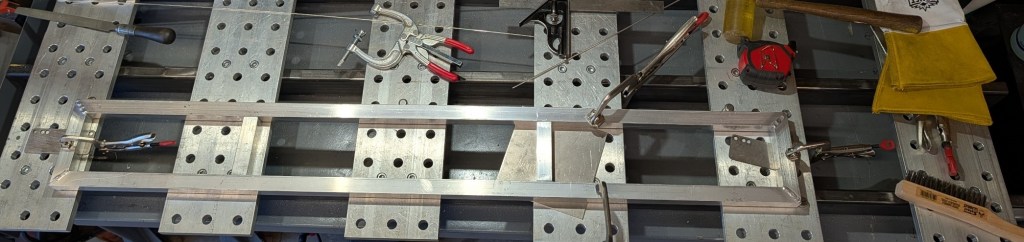
A year ago I planned to build a camper. After procrastinating most of last winter & spending most of spring and summer at the museum, here’s where I’m at.
The design evolved quite a bit:
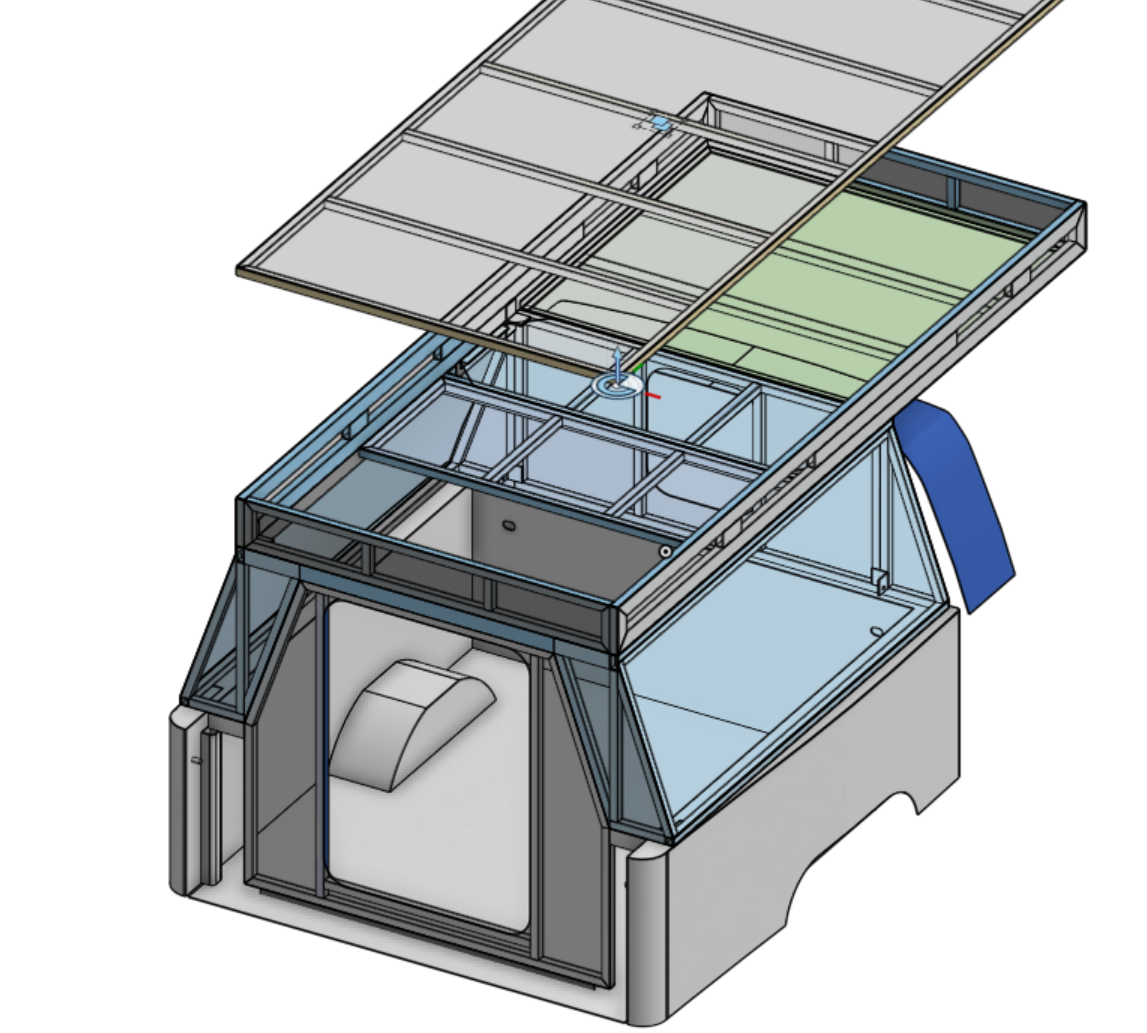
Rear panel will be inside the tailgate. Front and rear will have windows & door sourced from a Teardrop trailer supplier. The sleeping bunk will be 48″ wide. Roof is TBD.
I’ve created a 3D model in OnShape that’s open to viewing by anyone with the link below and copyable by anyone with a (free) OnShape account:
If desired one could modify it to fit their truck. Whatever. Key dimensions are stored in table of variables, so re-sizing it would be easy.
Cap frame is 1x1x1/8 & 1x2x1/8 aluminum tube, 6061-T6, TIG welded with 5356 filler. Overhang is two 1x2x1/8 6061 with spacers to keep them from getting too bendy. The cap’s skin is .050″ 5052 aluminum bonded to the frame with ‘CV’ VHB tape from a small, obscure company known as Minnesota Mining and Manufacturing.
Fallback for weld or VHB failure is field repair with rivets.
Note to self: Aways carry a hole shooter and rivet gun. Put it in the same bag as the duck tape and bungees.
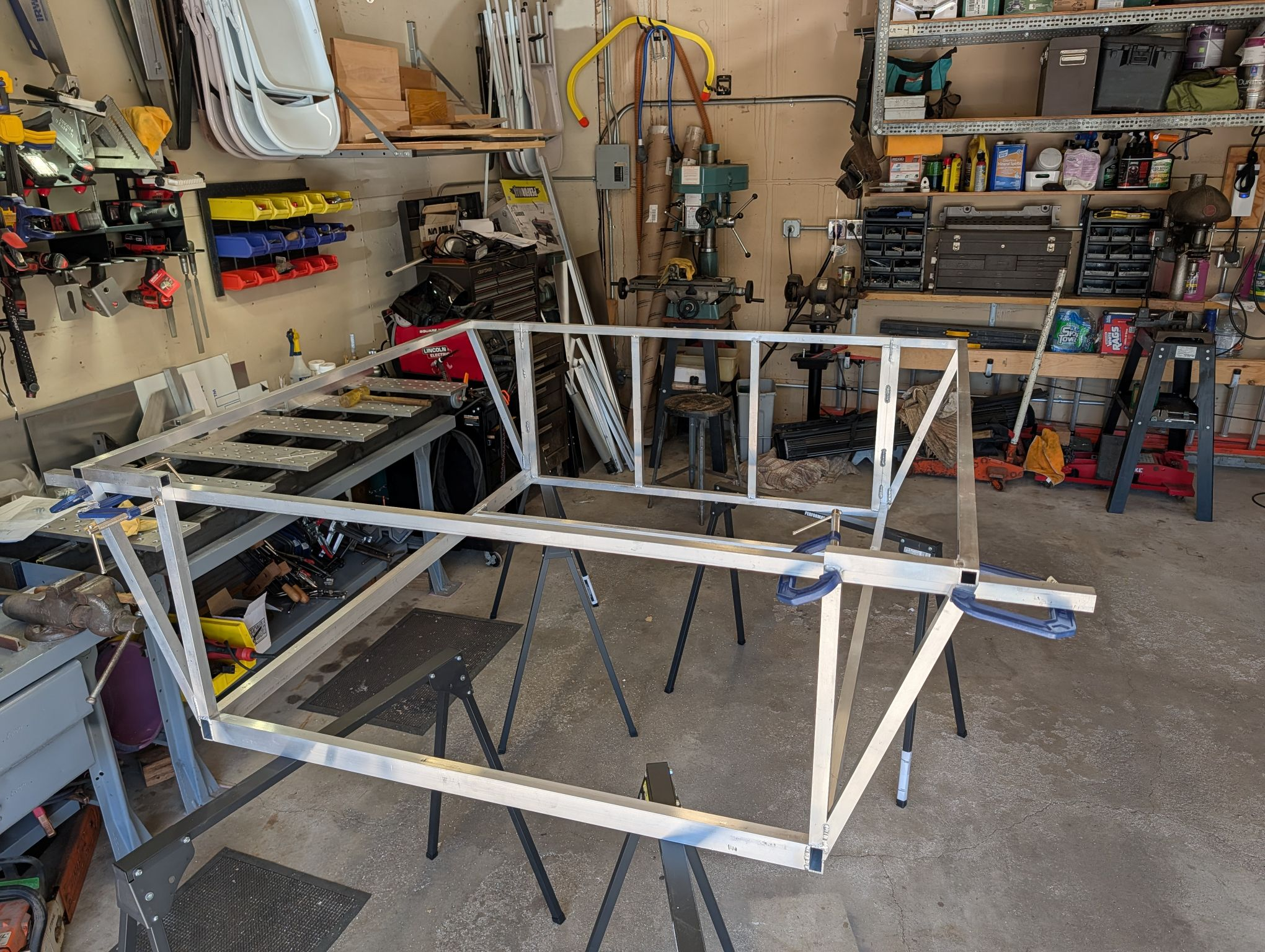
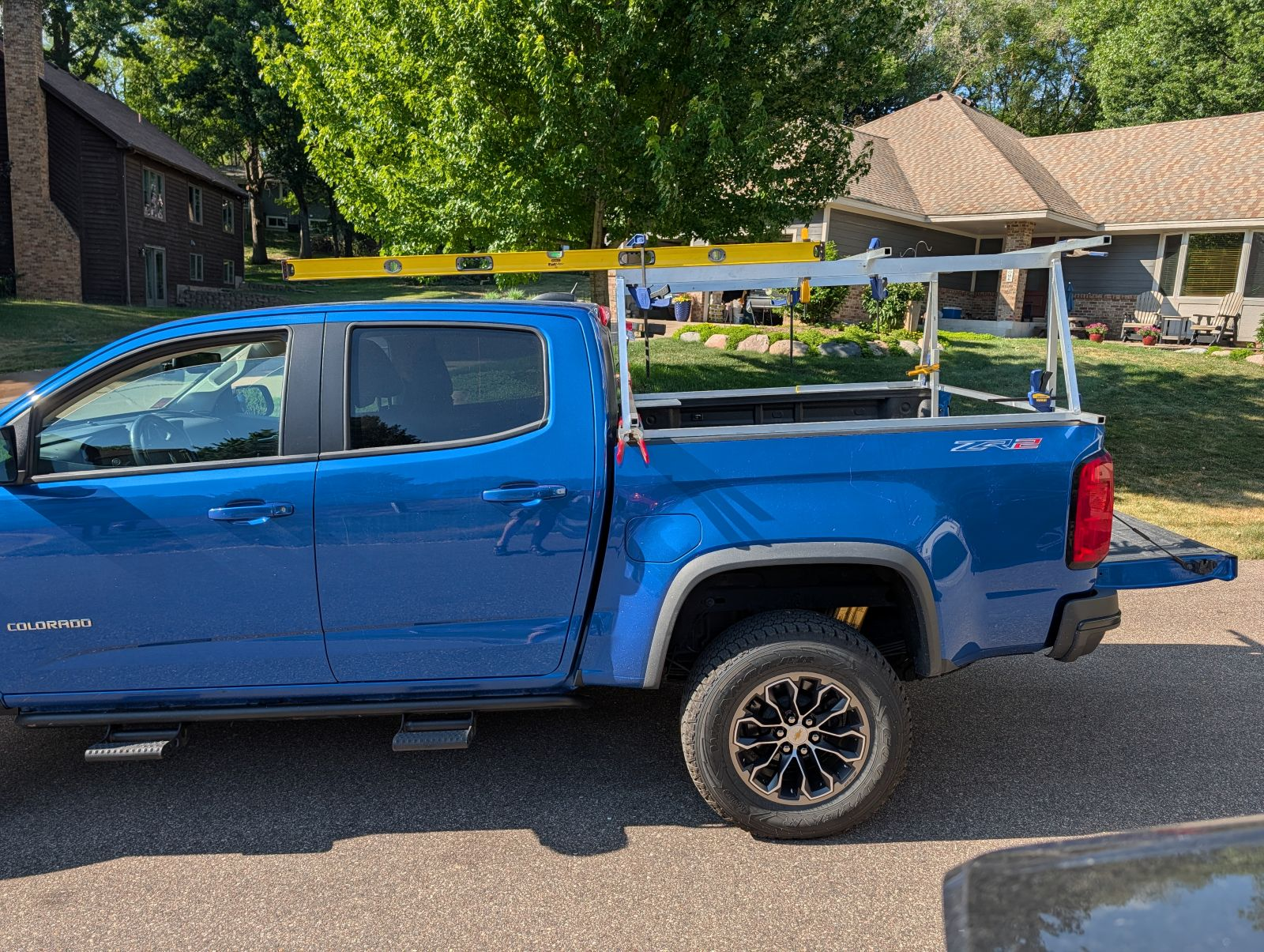
I bought poop-tons of aluminum – but only after waiting for the tariffs to kick in so I could pay half-again as much as planned, then did a bunch more procrastinating and eventually started welding the frame, doing occasional mockups and test fits:
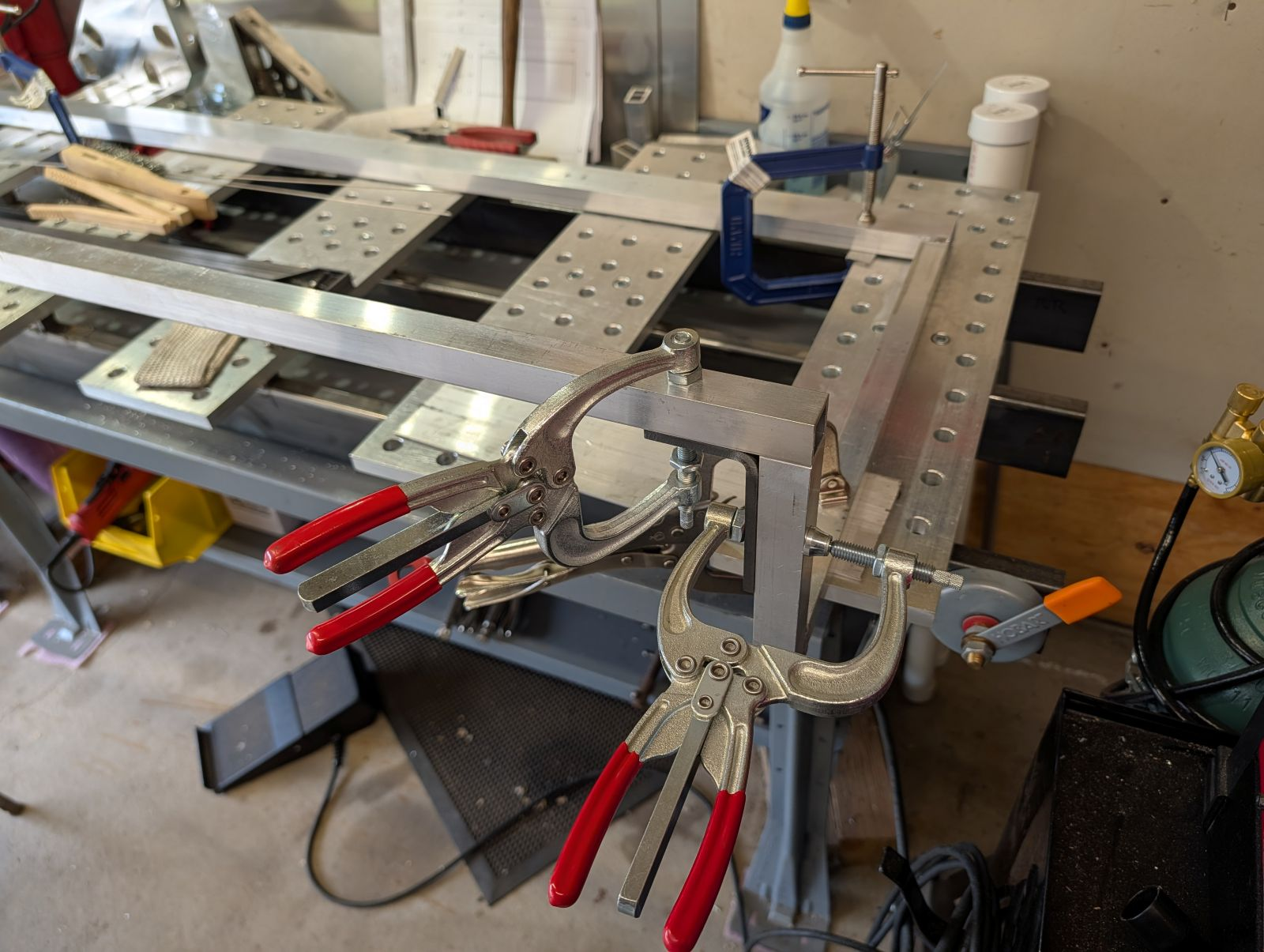
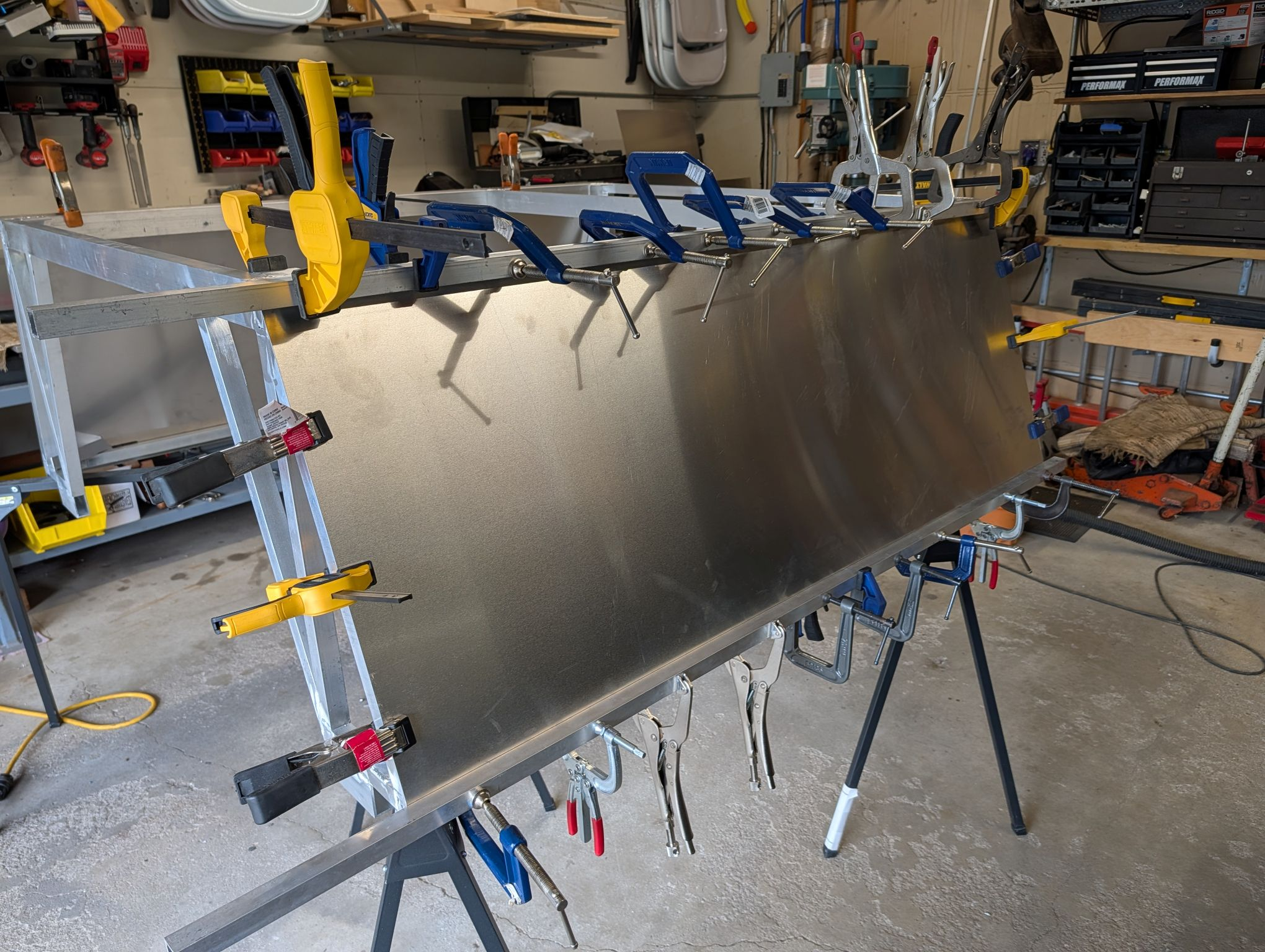
VHB’ing the skin went OK. For some (dumb) reason I designed the sides with bends in them, making fit-up much harder. I have access to an 8′ sheet metal brake so I was able to get the bends close enough to catch the VHB. I won’t design bent parts next time.
The VHB requires a pressure of 15psi to activate the bond. I figured 27 clamps would be adequate:
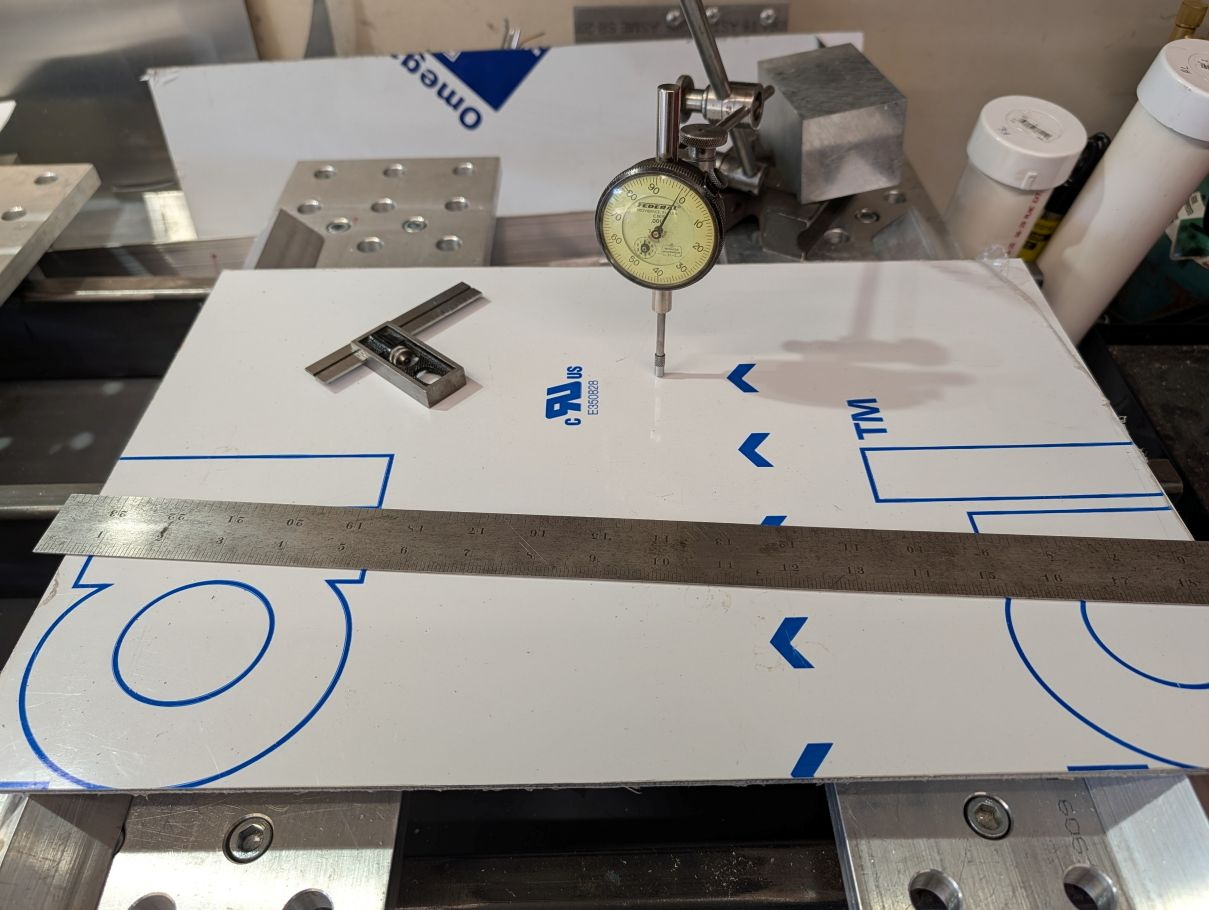
For the roof and bed platform skins, I’m planning on using aluminum composite (ACM). For a given weight, it’s less bendy than aluminum:
I did a bit of modeling to see how bendy & bouncy the cabover would be. I also compared my design to the commercial ones out there – figuring that they generally are not falling apart while going down the road. I think it’ll be OK. Maybe.
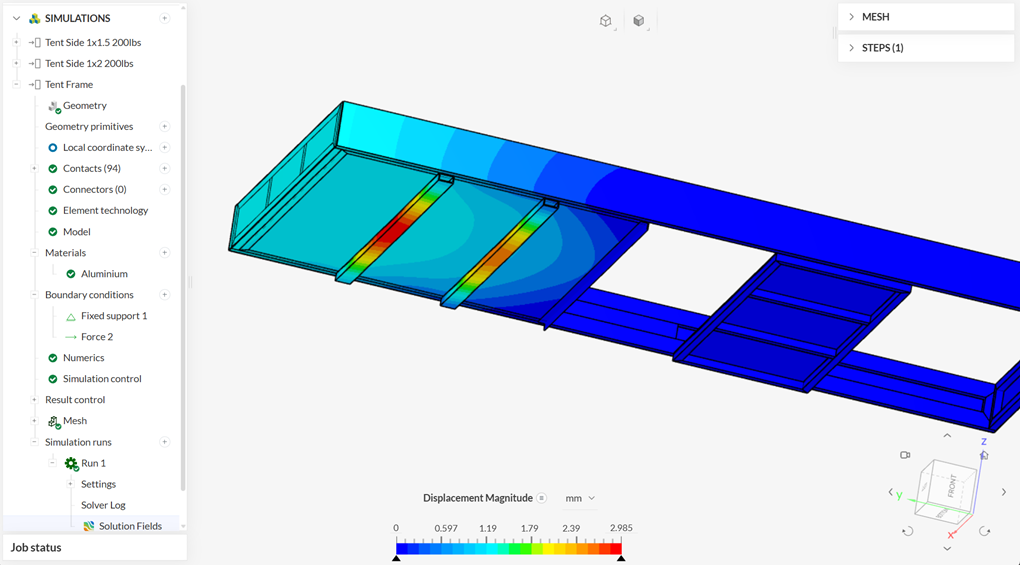
I’ll keep a rivet gun and some aluminum gussets handy just in case.
Whether it’ll be a canvas or hard-side popup, and whether it’ll be wedge or full popup is still TBD. I’m still figuring out how to build a hard-sided popup. Options under consideration include origami-style (Hiatus Campers) and mixed hard/soft side popups (Oru Campers):
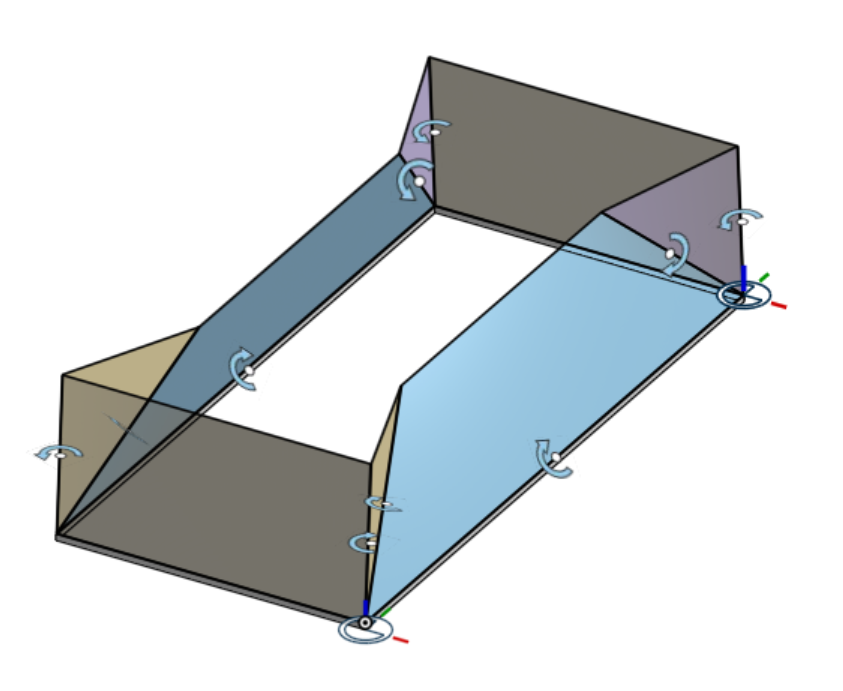
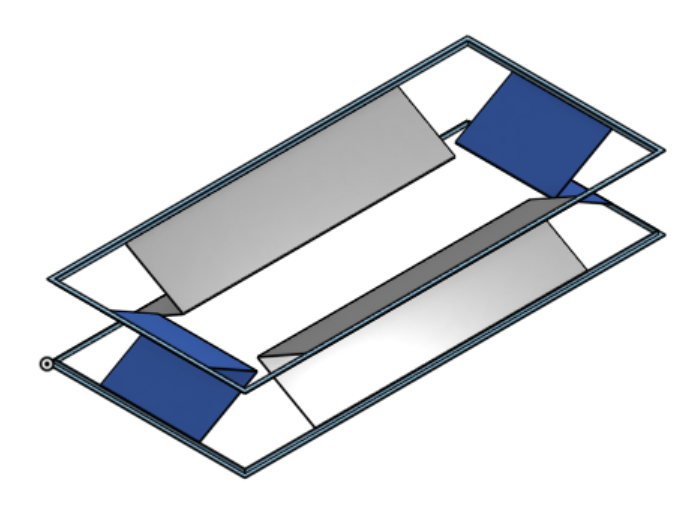
If I can’t figure out hard sides, I can fall back to canvas. It’ll still be better than a ground tent.
I spent way too much time deciding how long to make the bed & how much space I need to hop up on the bed. Those measurements determine the length of the tent portion. Shorter is lighter and stronger, too short would suck.
The commercial campers are all over the place on bed length, and some don’t even have space to access the bed without lifting a panel. One of them claims a 74″ bed, a bunch of others claim 76″ or 80″. I sleep with my feet hanging off the end of the bed even on a queen size bed, so I figure shorter is OK. The bed will be 74″ long with a 22″ opening for accessing the bed, making the overall length of the tent part 98″ – at least a foot shorter than originally planned. In the future if I want the bed longer, I can make the opening smaller.
I’d also like to make the tent frame removable (bolt-on). It might be nice to be able to run around town with just the cap.
As of today, the cap is welded and skinned, the tent frame sides and ends are welded & mocked up. I need to build the upper bed platform & use that to provide support for the tent frame & help keep it square when finishing welding the tent. My welds still are not great. Good enough. Maybe.
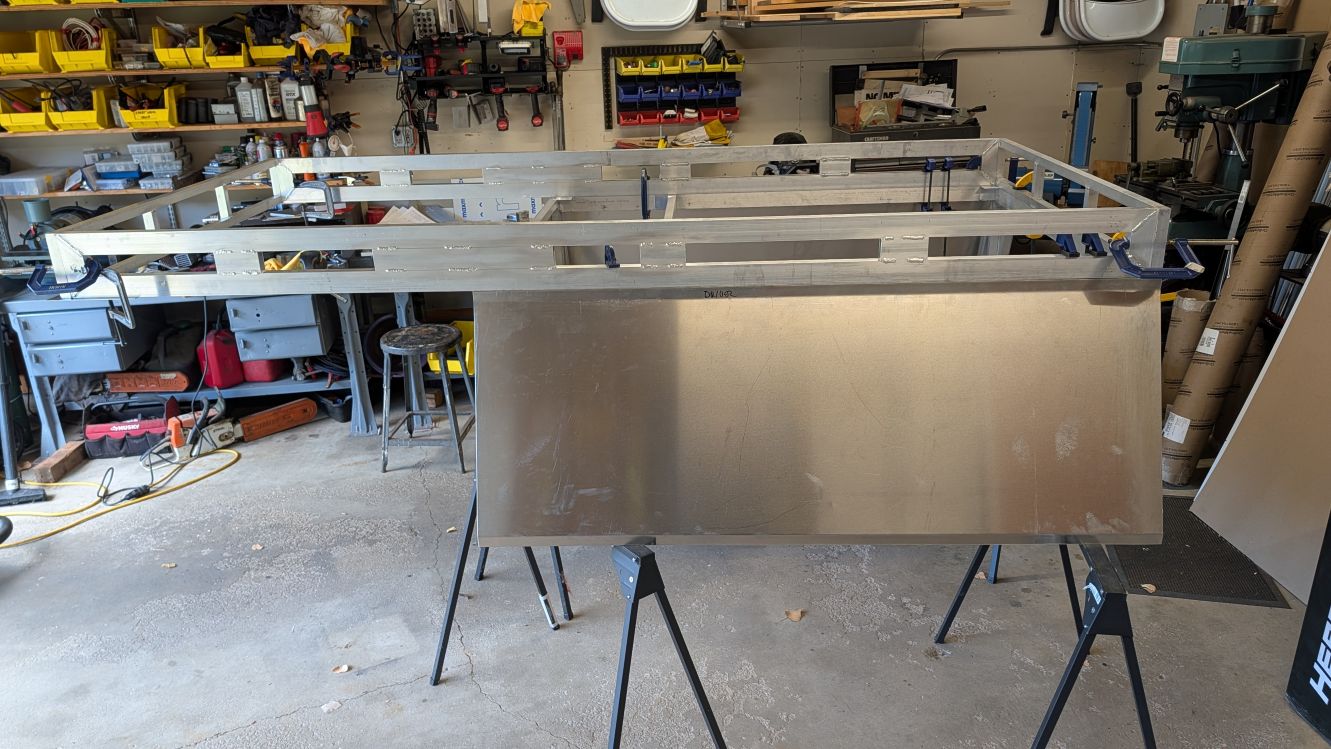
I learned a lot along the way. For instance – welding with wet gloves is a shocking experience, welding in sandals is OK for TIG, but not stick welding, etc.
Other than short trips around the state, we’re not traveling much – we’re both busy volunteering.
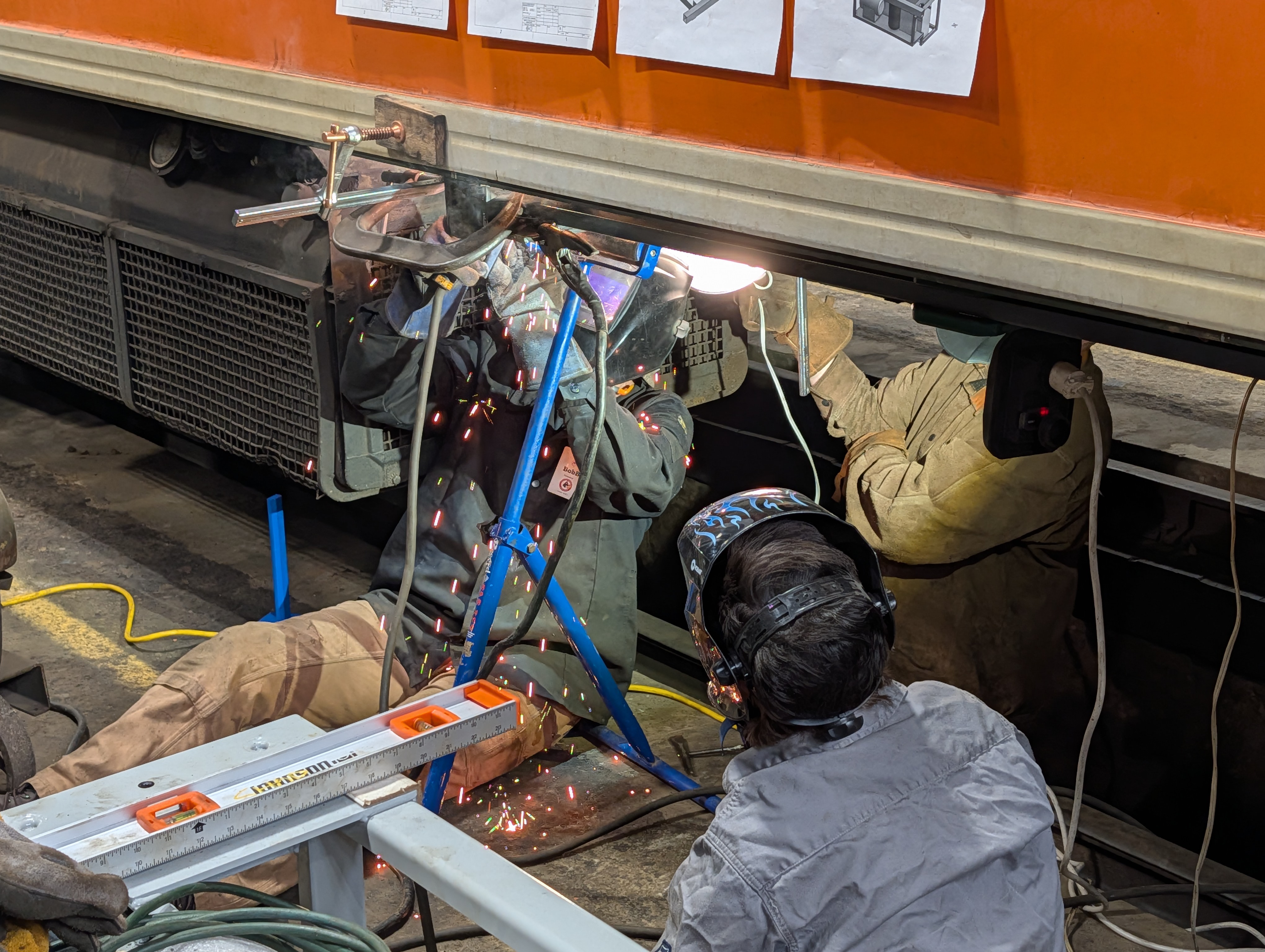
I spent half of the last six months working at the museum/railroad. One of our bigger projects was mounting a 10-ton A/C unit and 42kW 480V 3-phase generator under a seventy-year old passenger car & getting both fully functional. I was not the welder (or electrician) on that project. We have volunteers that know that they are doing.
Until next time…


Leave a comment