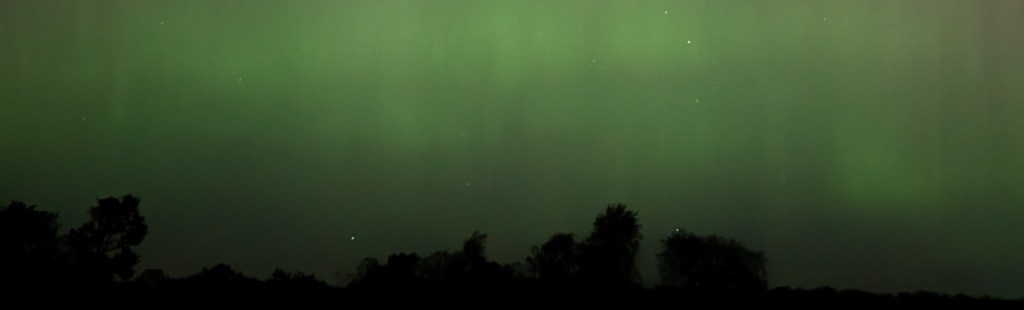
We chased the Aurora Borealis a few weeks ago and found decent light displays – better than I’ve seen in a long time. But we were too close to the metro area to get the best view. The lights were straight overhead at times, hence the reports and photos from far to the south.
In my experience, the photos of the lights tend to be more spectacular than the lights themselves. A 30-second exposure on a half-decent camera can gather more light and detail than a naked eye, and once adjusted in a photo-editing app, can show the lights far more spectacular than they actually were.
Examples
The first is a 30-second exposure, Olympus E-M1 II with a 12-40 F2.8 lens, about 45 min NE of the metro area, looking to the southeast. The second is the same image adjusted in Adobe Lightroom.
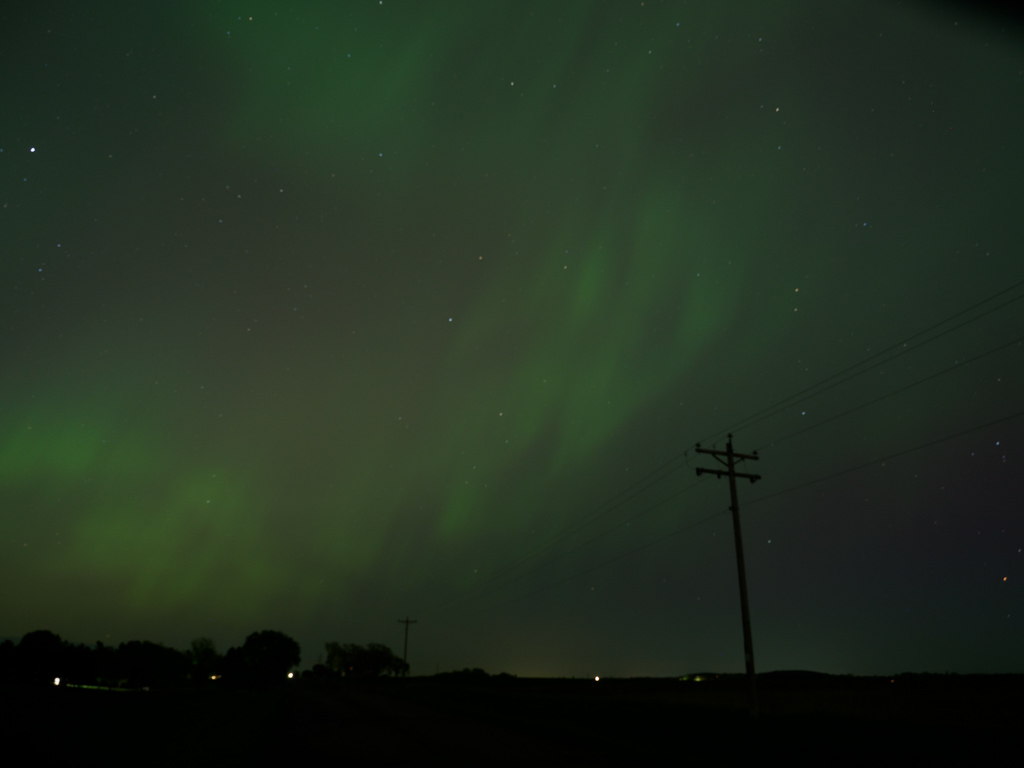
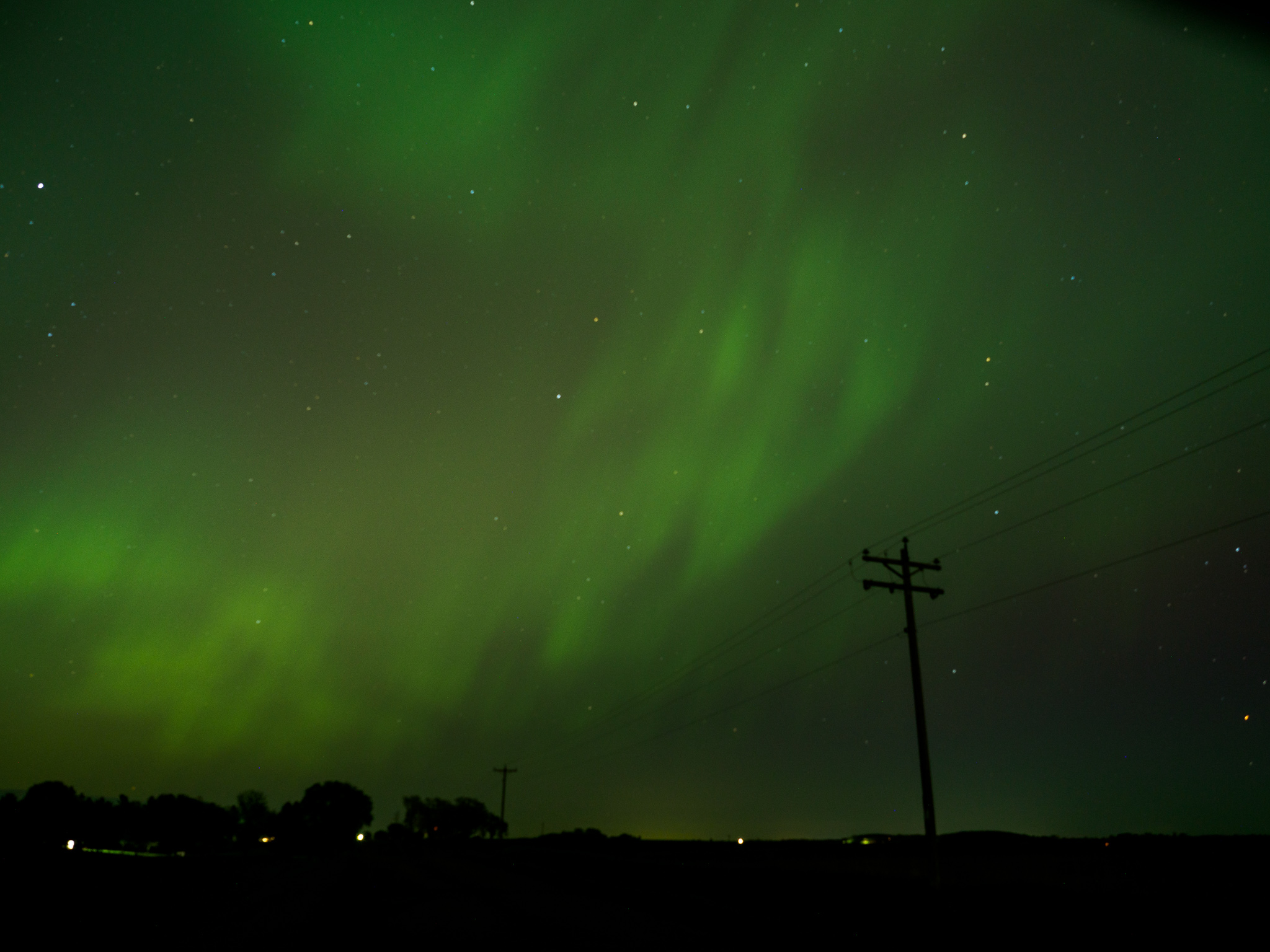
In real life, the lights were not as bright as the unadjusted photo – the 30-second exposure gathered more light than my naked eye. The adjusted photo looks much better but is less realistic.
A 40-second exposure with the same camera, same location, this time looking North:


The unadjusted 40-second exposure brought out the lights quite well – better than real life. The adjusted photo looks good, but even more than the unadjusted photo, doesn’t represent what my eyes actually saw.
I also took a few photos using my Pixel 7 ‘s night shot mode. The first is direct from the Pixel, the second is after adjusting color and brightness in Lightroom.


The Pixel mis-judged the color by a mile. The Northern Lights were mostly green & red, not blue and purple.
We’ve chased the lights a couple of times before, only to get disappointed by either the lack of lights, too many clouds, and even an unexpected fogbank. The biggest inhibitor is the background light of the Twin Cities – one needs to get fairly far away to get a dark enough sky. But driving a couple hours north on speculation that there might be lights doesn’t scale, so we miss out on them most of the time.
 Michael Janke
Leave a comment